|
Getting your Trinity Audio player ready...
|
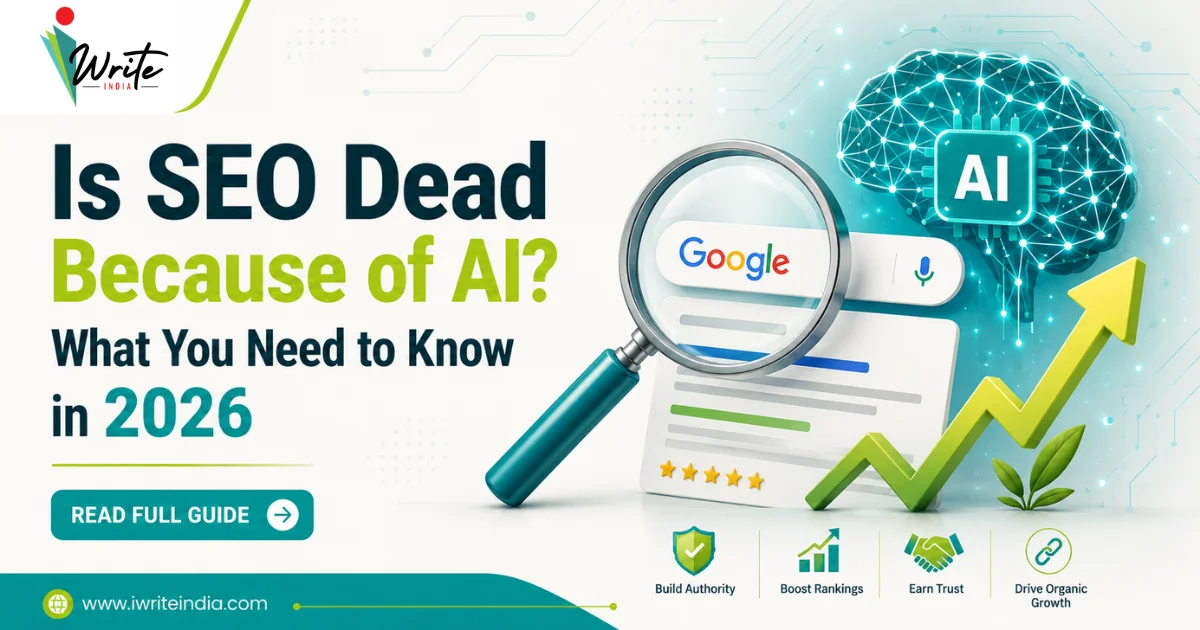
Every year for the last decade, someone has declared SEO dead. Panda killed it. Penguin killed it. Voice search killed it. Featured snippets killed it. Zero-click SERPs killed it. Now AI is supposed to kill it, definitively, this time.
Something has changed in 2026. But it isn’t the death of SEO. It’s the death of a certain kind of SEO: the volume game, the shortcut game, the game where thin content and manipulated links could still drive traffic. What’s left is SEO done properly, which is what most businesses should have been doing all along.
This guide covers the real data, the real changes, and what a business investing in is seo still relevant questions should actually do. If you want the technical foundations that still matter, our complete on-page SEO guide and complete guide to backlinks in SEO cover the two pillars that underpin everything below.
The Data: What AI Search Has Actually Done to SEO

The changes are real. Let’s start with the facts before the strategy.
Organic Click-Through Rates Have Dropped Sharply
According to Seer Interactive’s analysis of 5.47 million queries across 53 brands, organic click-through rates dropped from around 1.76% to 0.61% on queries where AI Overviews appear. That’s a decline of roughly 65%. Informational and educational queries have been hit hardest. Even queries without AI Overviews now show reduced CTR, suggesting user behaviour has shifted broadly, not just where the AI summaries appear.
Zero-Click Searches Now Dominate
Similarweb data shows zero-click searches rising from 56% in May 2024 to 69% in mid-2025, with mobile zero-click behaviour reaching 77%. In Google AI Mode specifically, the zero-click rate is around 93%. Users increasingly get their answers without clicking through to a website at all.
AI Overview Coverage Is Expanding
Google AI Overviews appeared on approximately 13% of Google queries by mid-2026, up from around 6.5% a year earlier. Projections for the end of 2026 put coverage at 20 to 25% of queries, and coverage continues to expand into commercial and transactional queries where it previously wasn’t triggered.
But Cited Brands Are Winning Big
The same Seer Interactive study found that brands cited within AI Overviews earn around 35% more organic clicks and 91% more paid clicks. Being referenced by AI has become its own form of visibility, and often a more qualified one. Users who click through after seeing your brand cited in an AI answer are further along the decision path.
What Has Actually Changed vs What Has Not
A clearer picture emerges when we separate the SEO trends that have actually shifted from the things that remain the same:
What Has Changed
- Traffic Volumes for Informational Content. If your traffic came from “what is X” queries, you’ve likely seen a real decline.
- The Value of Ranking Position 1. Being number 1 no longer guarantees the click; the AI Overview sits above it.
- The Definition of Visibility. Being cited in an AI answer is now a distinct visibility outcome that some traditional dashboards don’t track.
- The Importance of Brand Signals. Branded queries have gained CTR (around 18.7%) because AI Overviews add credibility for known brands.
- Where the Wasted SEO Effort Lives. Thin content, mass link building, and generic “how to” articles now produce even less return than before.
What Has Not Changed
- Search Volume Itself. People are still searching for the same things. The intent hasn’t disappeared.
- Google’s Reliance on the Web. AI Overviews still pull from web content. Around 97% of AIO citations come from pages already ranking in the top 20 organic results.
- The Fundamentals of On-Page SEO. Clear structure, good content, working technical foundations. All still required.
- The Role of Backlinks and Authority. Trust signals matter more, not less, when AI needs to decide who to cite.
- The Value of Real Expertise. E-E-A-T signals are how both Google and AI systems distinguish credible sources from filler.
Traditional SEO vs AI Search: How They Relate

The framing seo vs ai search makes it sound like they’re competing systems. They’re not. AI search sits on top of traditional search. Same infrastructure, same crawling, same signals, different presentation layer.
| Dimension | Traditional SEO | AI Search Optimisation |
|---|---|---|
| What Ranks Content | Google’s algorithm and ranking signals | AI system’s citation logic (built on ranking signals) |
| Primary Signals | Keywords, links, on-page structure, E-E-A-T | Same signals plus entity clarity and citation-friendly formatting |
| Where Traffic Comes From | Organic clicks from SERPs | Clicks from AI citations, brand mentions, direct traffic from referenced sources |
| How to Measure Success | Rankings, CTR, organic sessions | Citation frequency, share of AI voice, brand mentions in AI answers |
| What Foundation It Needs | Traditional on-page and off-page SEO | The same foundation plus GEO-specific optimisation |
Expert Insight: Google’s Own Position on SEO in the AI Era
Google Search Central states that “the fundamentals of what makes content good haven’t changed with AI Overviews. We continue to prioritise sending traffic to helpful content”.
Gary Illyes at Google confirmed in mid-2026 that “the underlying ranking systems that determine AI Overview citations are the same systems that produce organic rankings”.
Why SEO Actually Matters More in 2026
Counter-intuitively, the AI shift has raised the value of doing SEO properly. Three reasons:
AI Needs Trust Signals to Choose Citations
An AI system generating an answer can’t afford to cite unreliable sources. It looks for trust markers: authoritative domains, editorial-quality content, real authors, verifiable expertise. These are the same signals that lift traditional rankings. Our E-E-A-T optimization guide covers how these signals compound.
Fewer Clicks Means Each Click Matters More
If AI Overviews reduce total clicks by 40 to 60%, the clicks you do get are further along the funnel. Users who click through past an AI summary already have context. They convert better. This raises the return on every organic session.
Brand Visibility Now Requires Real Editorial Weight
AI systems cite brands they’ve encountered through editorial coverage, real client relationships, and authentic authority. Building this kind of profile is exactly what our complete guide to backlinks in SEO covers. The link building game hasn’t ended; it has become more selective.
What Actually Needs to Change in Your SEO Strategy

Practical shifts we recommend to every client running a SEO strategy in 2026:
Broaden How You Measure Success
Track share of voice in AI answers, brand mention frequency, and citation counts alongside traditional rankings. If your dashboard only shows rankings and sessions, you’re missing half the picture.
Shift Some Investment From Volume to Depth
Ten thin “how to” posts each earning 200 monthly visitors now earn less than one deep, authoritative guide earning citations across AI systems and driving qualified traffic. Consolidate.
Invest in Brand-Building Alongside Ranking
Branded queries have gained CTR in AI Overviews. If your business isn’t recognisable, no amount of technical SEO will earn you the branded CTR lift. This is where digital PR, thought leadership, and consistent brand appearance start to compound.
Optimise for Entity Clarity
AI systems read entities: your business, your services, your location, your team. Make each of these unambiguous through structured data, consistent NAP information, and clear authorship. This is basic hygiene that pays off across every AI surface.
Invest in AEO and GEO Alongside Traditional SEO
Answer Engine Optimisation and Generative Engine Optimisation aren’t replacements. They’re overlays. Adding them without abandoning traditional SEO is the correct move. We cover this in more depth in our supporting blogs on AI Overviews and generative engine optimization.
What Is Not Working Anymore
Some tactics that used to produce results have effectively stopped working. If your budget is going into any of these, you’re subsidising outdated traditional SEO methods:
- Thin AI-Generated Content at Scale. Google’s Helpful Content System deprioritises this reliably.
- Mass Link Building Through PBNs or Paid Networks. Filtered out at higher rates than in previous years.
- Chasing Featured Snippets Without Broader Authority. Increasingly AI Overviews take the position formerly held by featured snippets.
- Keyword-Stuffed “How To” Posts. Absorbed and summarised by AI Overviews with no click to your site.
- Ignoring Brand-Building Because SEO Is Cheaper. SEO now delivers more for brands with existing recognition than for those without.
How iWrite India Approaches Client SEO in 2026
Our position across every client engagement is direct. Traditional SEO fundamentals still deliver, but with tighter quality requirements. AI search is not a replacement; it’s an additional visibility layer we optimise for alongside traditional rankings.
For an ecommerce client like Circles & Squares, our Delhi-based home furnishings brand, this meant adding entity-clarity work and AI citation tracking alongside the existing SEO programme. For a healthcare client like Synergy Rehab, it meant deeper investment in author-level E-E-A-T because AI systems weight named clinical expertise heavily.
Every SEO Services in Delhi engagement we run now includes AI search visibility as a first-class outcome, not an afterthought. If you’d like to see where your business stands across both surfaces, our SEO services in Delhi team can run a combined audit.
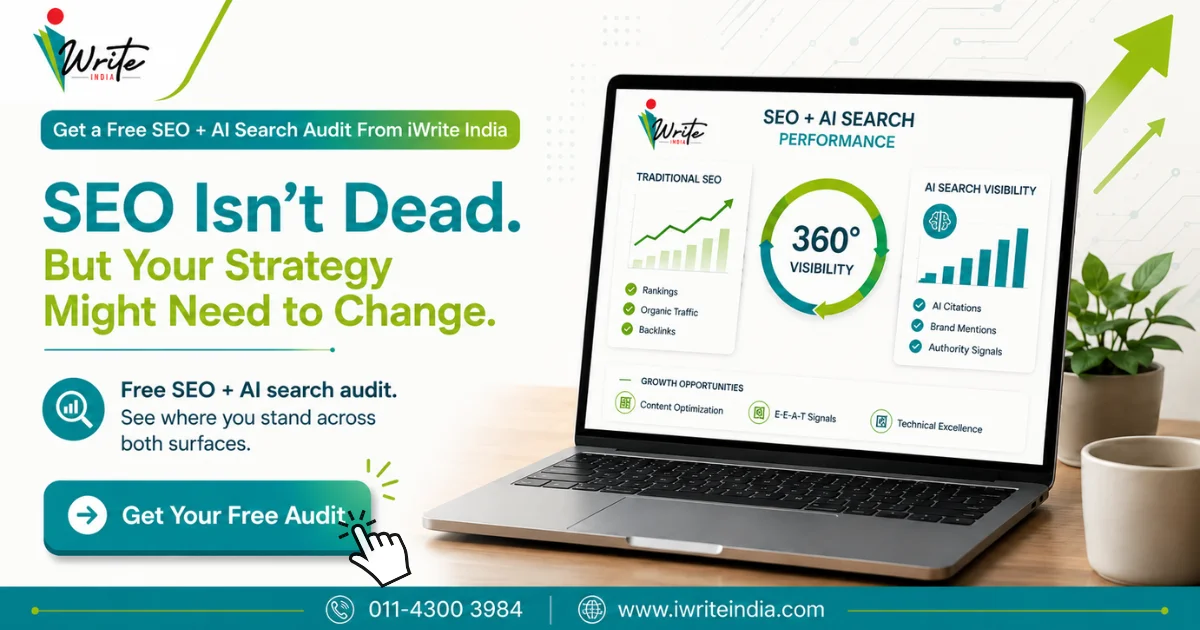
Get a Free SEO + AI Search Audit From iWrite India
If you’re rethinking your SEO investment for 2026, we can help. A free audit shows where you stand in traditional Google search and in AI answers, and what to do about both.
Book a Free SEO + AI Search Audit today.
Phone: 011-4300 3984
WhatsApp: +91-7303406968
Email: [email protected]
Website: www.iwriteindia.com
Office: C-81, Near ICICI Bank, Malviya Nagar, New Delhi 110017
Our USP: Delhi’s trusted SEO partner for 13+ years. Women-led, data-driven, focused on outcomes over trends.
FAQs About Is SEO Dead in 2026
Q1. Is SEO Dead in 2026?
No, SEO is not dead. It has changed significantly. AI Overviews and zero-click searches have reduced organic click-through rates, but the pages that get cited in AI answers are the same pages that rank well in traditional search. SEO is now the foundation for both traditional rankings and AI citation. Investment in quality SEO delivers more than ever, just measured differently.
Q2. Will AI Replace SEO Completely?
No. AI systems including Google AI Overviews, ChatGPT search, Perplexity, and Google AI Mode still rely on web content and traditional ranking signals to decide what to cite. Around 97% of AI Overview citations come from pages already ranking in the top 20 organic results. Traditional SEO is the prerequisite for AI visibility, not a replacement for it.
Q3. Is SEO Still Relevant if AI Overviews Take Most Clicks?
Yes, and arguably more relevant. AI Overviews reduce total clicks but the clicks you do get are more qualified. Users who click through past an AI summary already have context, so they convert better. Brands cited in AI Overviews earn around 35% more organic clicks and 91% more paid clicks than uncited brands, according to Seer Interactive’s 2025 analysis.
Q4. What Should Businesses Do About the SEO Changes in 2026?
Broaden how you measure success (track AI citations alongside rankings), invest in depth over volume, build brand recognition alongside technical SEO, and optimise for entity clarity so AI systems can identify your business unambiguously. Continue investing in traditional SEO fundamentals; they remain the foundation.
Q5. How Much Has Organic Traffic Dropped Because of AI?
US organic search traffic dropped around 2.5% year-over-year as of January 2026 in aggregate, but the picture varies dramatically. Publisher traffic fell around 33% globally and 38% in the US. Individual websites in informational categories have seen drops of 20 to 60%, while brand-strong sites and those cited by AI have seen gains. Averages hide the real distribution.
Q6. What Is Zero-Click Search and How Does It Affect SEO?
Zero-click search is when a user’s query is answered directly in the search results without them clicking through to a website. Around 60% of Google searches now end without a click, rising to 77% on mobile and 93% in Google AI Mode. This affects SEO by reducing overall traffic potential from informational queries and shifting the value toward brand visibility and commercial-intent traffic.
Q7. Do I Still Need Backlinks if AI Is Doing the Ranking?
Yes, backlinks matter more than ever. AI systems need trust signals to decide who to cite, and backlinks remain the most measurable trust signal available. Around 97% of AI Overview citations come from pages already ranking in the top 20 organic results, and those top-20 positions are heavily influenced by backlinks. Authority signals now drive both traditional rankings and AI citation eligibility.
Q8. Should I Still Hire an SEO Agency in 2026?
Yes, if the agency understands the shift and offers both traditional SEO and AI search optimisation. The agencies that are behind the times still sell volume-based link packages and generic content. The ones worth hiring in 2026 do traditional SEO fundamentals well and also help you get cited in AI answers. Our SEO services in Delhi cover both.


